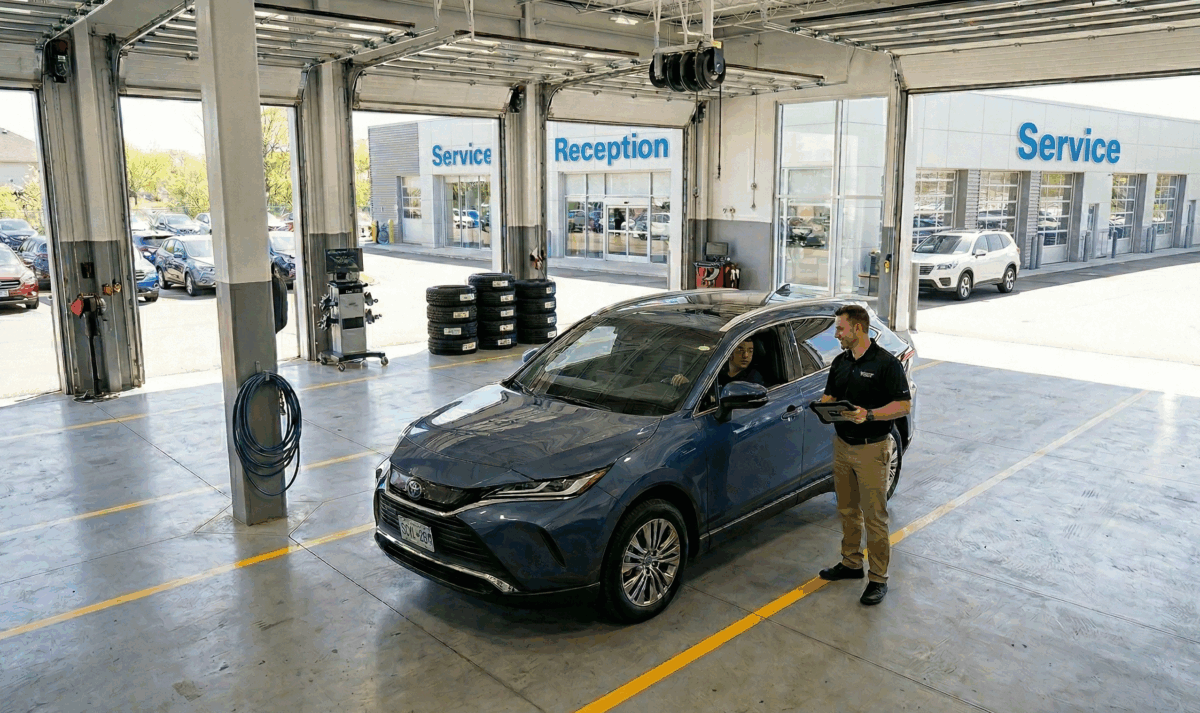
Spring is historically the busiest season for fixed operations. Between tire changeovers and alignments necessitated by pothole season, your service bays are likely at capacity. While high RO (repair order) counts are excellent for immediate revenue, many dealerships miss the larger opportunity to use this influx of foot traffic to fuel the sales floor.
This playbook outlines actionable strategies to help your dealership capture maintenance intent and convert service customers into sales opportunities.
Phase 1: Capture Spring Maintenance Intent
Before you can convert a service customer, you must get them through the door. Shoppers are actively searching for seasonal maintenance, and your digital presence must align with that intent.
- Audit Local SEO: Ensure your Google Business Profile (GBP) is updated with current spring hours and specific service attributes. Local search visibility is the primary way customers find repair services near them.
- If you haven’t done so already, create a separate department Google Business Profiles as nested listings for Service & Parts. Make sure the listings have a unique phone number (direct line), category, link to a unique URL on your website, and update the location to denote “located in” and link the main GBP listing.
- If you haven’t done so already, create a separate department Google Business Profiles as nested listings for Service & Parts. Make sure the listings have a unique phone number (direct line), category, link to a unique URL on your website, and update the location to denote “located in” and link the main GBP listing.
- Deploy Targeted Search Campaigns: Focus your search engine marketing (SEM) budgets on high-intent keywords such as tire changeover, spring tune-up, and A/C service.
- When a search is being made for these high-intent keywords, you may not know who the customer is yet, but you know they have a problem (seasonal maintenance) and are looking for a solution. These campaigns will ensure that anyone in your local area with that specific need finds you.
- When a search is being made for these high-intent keywords, you may not know who the customer is yet, but you know they have a problem (seasonal maintenance) and are looking for a solution. These campaigns will ensure that anyone in your local area with that specific need finds you.
- Brand Alignment: Data suggests that service-related campaigns are one of the most effective ways to acquire customers who already own the brands you sell.
- Meaning, if you’re a Ford dealership, and a potential customer is searching for “Ford oil change”, they aren’t just looking for a service, they are identifying themselves as an owner of that specific brand – and they may be one who didn’t purchase from you previously. By winning that service visit, you align your dealership as the local authority for the vehicle (and brand) they already know and trust.
Phase 2: Create Thumb-Stopping Social Content
Most dealerships run generic 10-percent-off service ads that shoppers often ignore. To stand out on platforms like Meta and TikTok, you need content that showcases the actual experience of your service department.
- Show Your Technicians in Action: A short-form video of a technician performing an alignment or a multi-point inspection builds transparency and trust.
- Leverage Before and After Visuals: Visual proof of a detailed vehicle or a replaced cabin air filter provides tangible evidence of value.
- Build Authority: Explanation videos and content can go a long way in demystifying common spring services that car owners ignore. A 60-second video explaining how a spring pothole impacts wheel alignment, or showing images of the physical wear on a tire, provides a visual “why” that justifies the need for the service, and the associated cost.
Phase 3: Build the Trade-Up Bridge
The gap between seasonal maintenance and a return on investment (ROI) is the trade-in. Spring maintenance visits provide a natural, low-pressure opening for an appraisal.
- The Repair Cost Pivot: When a customer is faced with a $2,000 repair bill or needs a full set of tires and brakes, it is the perfect moment to offer a stress-free trade-up.
- Maintain VDP Health: Ensure your vehicle details pages (VDPs) are updated with high-quality video content. If a service customer wanders onto your website while waiting for their vehicle, your inventory must be impossible to ignore.
- Intent-Based Triggers: Use lead generation tools to present personalized offers specifically to shoppers engaged with service pages, rather than showing a generic sales pop-up.
Actionable Takeaways for Your Team
To turn this playbook into results, your dealership must move beyond the traditional silos of service and sales. Success in the current market requires a comprehensive audit of your digital footprint to ensure your search campaigns, website content, and social media presence are working in unison. You should evaluate whether your service pages offer the same high-quality video and educational value as your sales inventory, or if they remain static placeholders.
This shift also demands a pivot in mindset regarding the service lane itself. In many high-performing stores, the service advisor acts as the primary point of contact for customer retention, making them the most effective person to initiate an upgrade conversation. Rather than focusing solely on parts and labor upsells, empower your team to view every significant repair estimate as an opportunity to transition that customer into a newer, more reliable vehicle.
By treating the service bay as a high-intent acquisition center, you can proactively refresh your customer base and build a self-sustaining pipeline that thrives well beyond the spring season
Want More Insights Like This? 👉 Sign Up Now 👈
Get our monthly newsletter packed with proven strategies, fresh trends and webinar invites to drive traffic, leads, and revenue right to your inbox!
Related Reads: